Saito will be in charge of the second part. I would like to introduce you to “Akita City Folk Performing Arts Heritage Center (nickname: Neburi Nagashi Kan)” and Designated Tangible Cultural Propety of Akita City “Old Kaneko Family House”.
二回目は齋藤が担当します。「秋田市民俗芸能伝承館 愛称:ねぶり流し館」と、市指定有形文化財「旧金子家住宅」についてご紹介します。
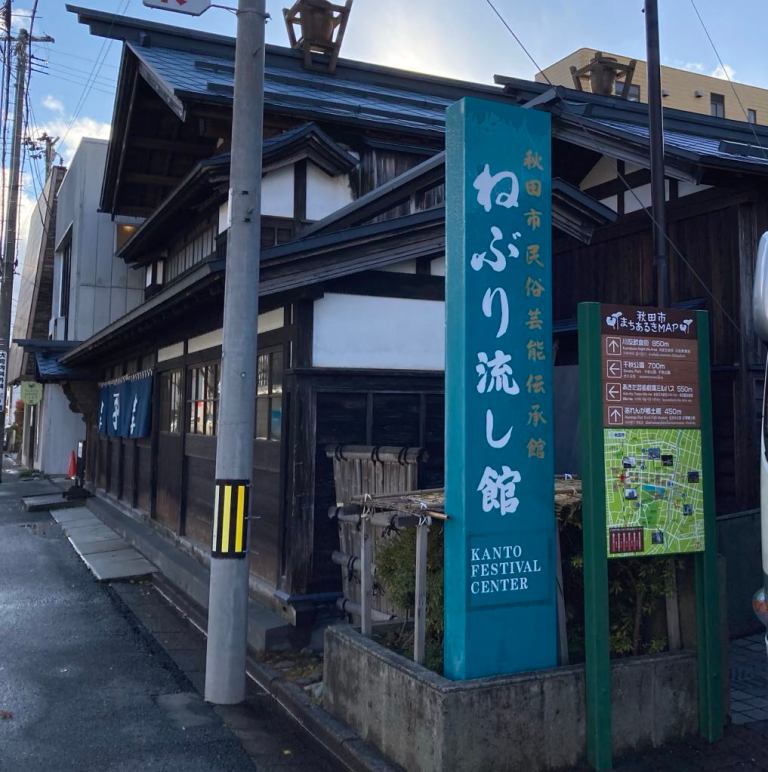
At Akita City Folk Performing Arts Heritage Center, there are exhibits introducing Akita’s folk events and performing arts, including Kanto Festival. You can learn about Kanto festival and experience some elements of the festival, such as balancing the kanto poles or playing the taiko drum.
はじめに、「秋田市民俗芸能伝承館愛称:ねぶり流し館」は、竿燈をはじめとする秋田の民俗行事や芸能の展示紹介、また、実際にお祭りで使用される竿燈を手に乗せたり、太鼓をたたいたりなどの体験をすることができます。
The nickname “Neburi Nagashi” comes from an old custom of washing away dirt and evil spirits on bodies into the river during the Obon season. It was believed that evil spirits would possess people while they were sleeping, so people would bathe seven times to wash themselves and get rid of sleepiness. During the time, children and young people carrying long bamboo poles with lanterns paraded through the town. Then the custom was called “Nemuri Nagashi Toro (Washing Away Sleepiness Lanterns) “and today, it is nationally known as “Akita Kanto Festival”
「ねぶり流し館」の名前「ねぶり流し」とは、「身についた汚れや悪霊などを川に流す」という古くからの風習から、特に「眠っている間に悪霊が取りつく」と信じられていたので「盆のころに眠気を取り除く(はらう)ために7回水浴び」していたことから、眠り流し(ねぶり流し)と呼ばれるようになったそうです。この時期に子供や若者たちが長い竹竿に灯籠をたくさんつけて、町中を練りまわることから「眠り流し灯籠」と呼ばれ、今では「秋田の竿燈」として、全国的に知られています。
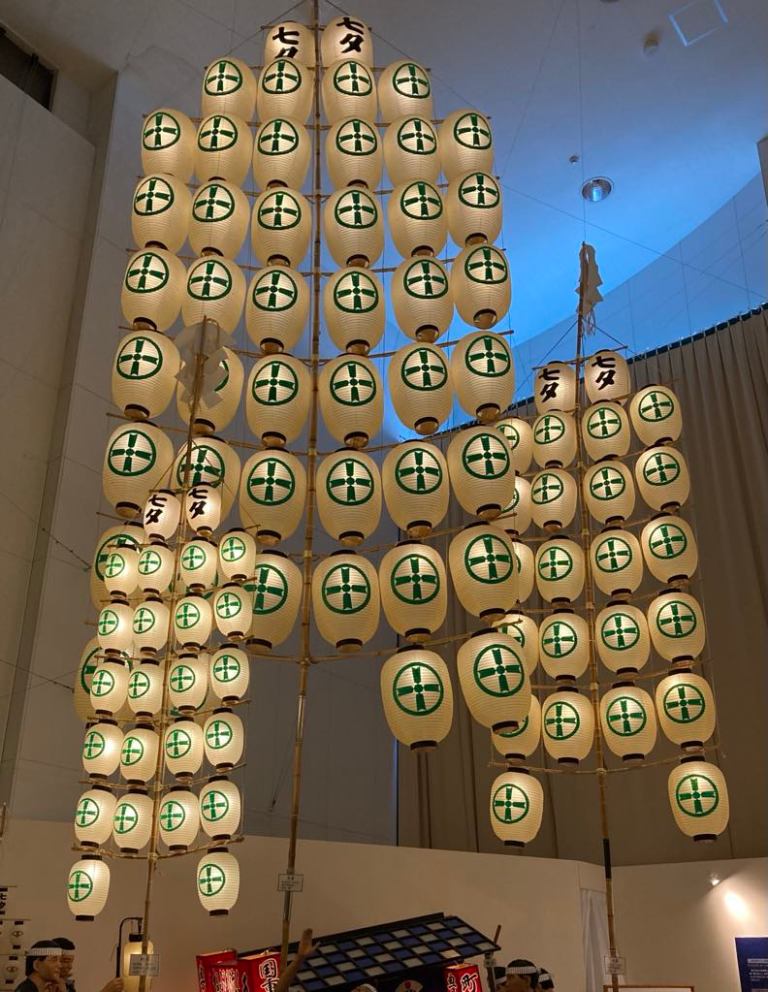
There are four different sizes of kanto, from children’s to adults’. Each size varies in the height and weight of the bamboo, as well as the height and number of lanterns. The smallest kanto, called “Yowaka”, is 5m tall, weighs 5kg, and has 24 lanterns which are 30cm long. In contrast, the largest kanto for adults, known as “Owaka”, is 12m tall, weighs 50kg, and holds 46 lanterns which are 64cm long.This means Owaka is about twice as tall, twice as long, has twice as many lanterns, and is an amazing 10 times heavier than Yowaka. Seeing an adult kanto is truly overwhelming because of its huge size.
竿燈の大きさは、子供用から大人用まで、4種類あり、竹の高さや重さ、提灯の高さと数がそれぞれ異なります。 1番小さい「幼若(高さが5m、重さ5kg、提灯の長さ30cm、提灯の数24個)」に対して、1番大きい大人用の「大若(高さが12m、重さ50kg、提灯の長さ64cm、提灯の数46個)は、竿の高さと提灯の長さと提灯の数は約2倍、重さはなんと、10倍もあり、実際に大人用の竿燈を見ると、その大きさに圧倒されます。
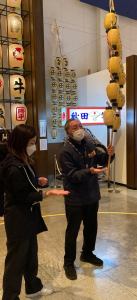
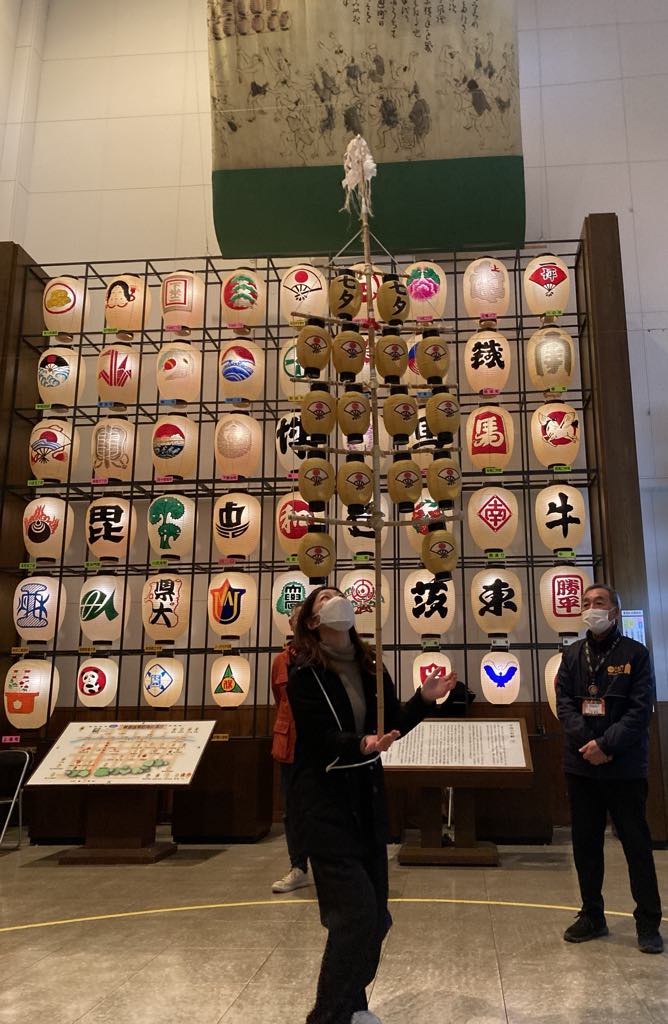
At Neburi Nagashi Kan, you can actually hold a small Kanto for experience in the palm of your hand. Our staff had the chance to try it out. At first, it seemed difficult to balance even a small Kanto on one hand, but the staff at the Neburi Nagashi Kan gave tips and our staff member was able to support it skillfully. Other visitors including international tourists also enjoyed and had a lot of fun!
「ねぶり流し館」では体験用のミニ竿燈を、実際に手のひらに乗せることができます。私たちのスタッフも体験させていただきました。ミニ竿燈でも、片手に乗せてバランスを取るとのは、初めは難しそうでしたが、ねぶり流し館の方がコツを教えて下さりスタッフも上手に支えることが出来ました。私たちの他にも、インバウンドのお客様も竿燈を体験してとても楽しそうでした。
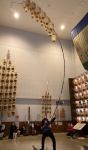
The highlight of the Kanto Festival is the skillful “techniques” performed while balancing the large, heavy Kanto poles. There are five types of Kanto Myogi (Kanto Performance Skills).
このような大きくて重い竿燈を支えながらの巧みな「技」が、竿燈祭りの見せ場となっています。「竿燈妙技」と呼ばれる技には、5種類あります。
①Nagashi (Handing over): This is the technique that requires the most grip strength. The performer continuously adds bamboo extensions, one by one to increase the height of the pole. ②Hirate (Palm): The Kanto pole is balanced on the palm of the dominant hand and raised high into the air.③Hitai (Forehead): After balancing the pole on the palm of the dominant hand , the performer carefully shifts it to rest on his forehead. Both arms are extended wide to maintain balance.④ Kata (Shoulder): The pole is supported with the dominant hand and carefully lowered straight onto the shoulder. The performer spreads his arms wide and keeps the pivot foot in line with the Kanto pole.⑤Koshi (Lower back):Once the pole is stabilized on the palm of the dominant hand, the performer skillfully balances it on his lower back. This is a highly advanced technique requiring great expertise.
①流し:一番握力を必要とする技。竹を継ぎ足していきます。②平手:竿燈を利き腕の手のひらに乗せて高々とかざし上げて見せます。③額:利き腕の手のひらに受け、静かにずらしながら額に乗せて静止。両手を大きく開いてバランスを取ります。④肩:利き腕で支えてまっすぐ肩に降ろします。両腕を広げ軸足と竿燈が一直線になるようにします。⑤腰:利き腕の手のひらに静止させてから、腰に竿燈を乗せる熟練の技。
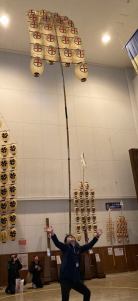
The staff of “Neburi Nagashi Kan” actually held “Kowaka” Kanto (height 7m, weight 15kg) and demonstrated the five techniques introduced earlier. We were moved by the beauty of Kanto Performance Skills as he maintained the balance of the rod with the exquisite posture of his hand, feet, and hip.
「ねぶり流し館」のスタッフの方が、実際に高さ7m、重さ15kgの「小若」の竿燈を持って、先ほど紹介した5つの技を披露してくださいました。目の前で、手、足、腰の絶妙な構えで竿の均衡を保つ、その竿燈妙技の美しさに感動しました。
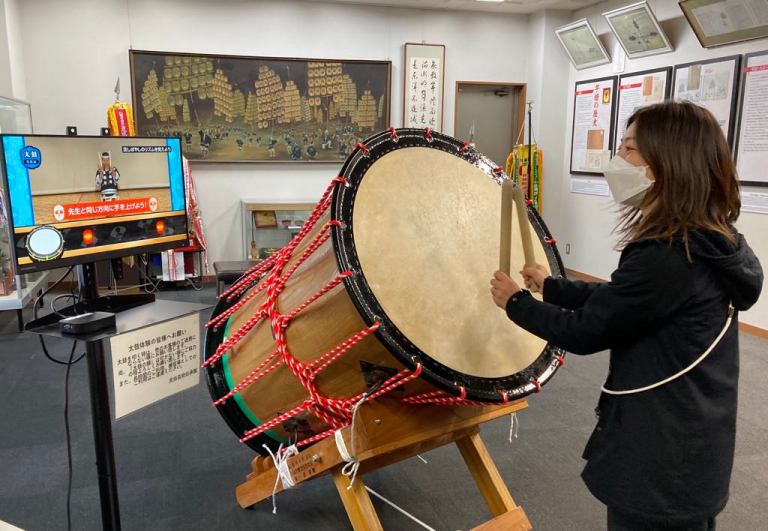
During Kanto Festival, the sound of the taiko drums and flutes accompanies the performances, adding excitement and energy to the festival. At Neburi Nagashi Kan, you can experience playing the taiko drums yourself. Our staff also gave it a try. Hitting the large taiko drum in rhythm feels great, and I think it’s an enjoyable experience for both children and adults.
竿燈祭りの最中は、太鼓と笛のお囃子もお祭りに彩りを添えます。そのひとつ、「太鼓」の演奏を体験することができます。スタッフも体験させていただきました。大きな太鼓をリズムに合わせてたたくのは、気持ちが良く、子供から大人まで楽しめる体験だと思いました。
Akita Kanto Festival is open to the whole family, from small children to adults. I think that kindergarten children are very happy when they can finally support the “Yowaka” for the first time after practicing every day for the festival. Their next goal is to handle the “Kowaka” and “Chuwaka” and to master the techniques. They learn from their seniors in their community, train together with friends, and take pride in the history and tradition of the Kanto Festival, which has been passed down through generations. It was wonderful to see such traditional performing arts being preserved and passed on.
秋田竿燈祭りは、小さい子どもから大人まで、家族みんなで参加することが出来ます。幼稚園の子供たちが毎日お祭りに向けて練習を重ねて、初めて「幼若」を支えることができた時の子供たちの喜びはとても大きいと思います。次は「小若」、「中若」を支えたい、技を身につけたい、と、町内の先輩たちから学び、仲間と一緒に修練し、先祖から伝わる歴史と伝統の竿燈祭りに誇りを持って伝承していく伝統芸能はとても素晴らしいと感じました。
Akita Kanto Festival is held every August, but at Neburi Nagashi Kan you can experience Kanto Festival all year round, so I highly recommend it to anyone visiting Akita.
秋田竿燈祭は、毎年8月に開催されますが、「ねぶり流し館」では、1年中、竿燈祭りの体験ができるので、秋田を訪れる方にはぜひお勧めしたいです。
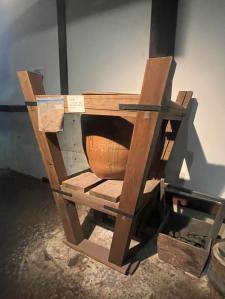
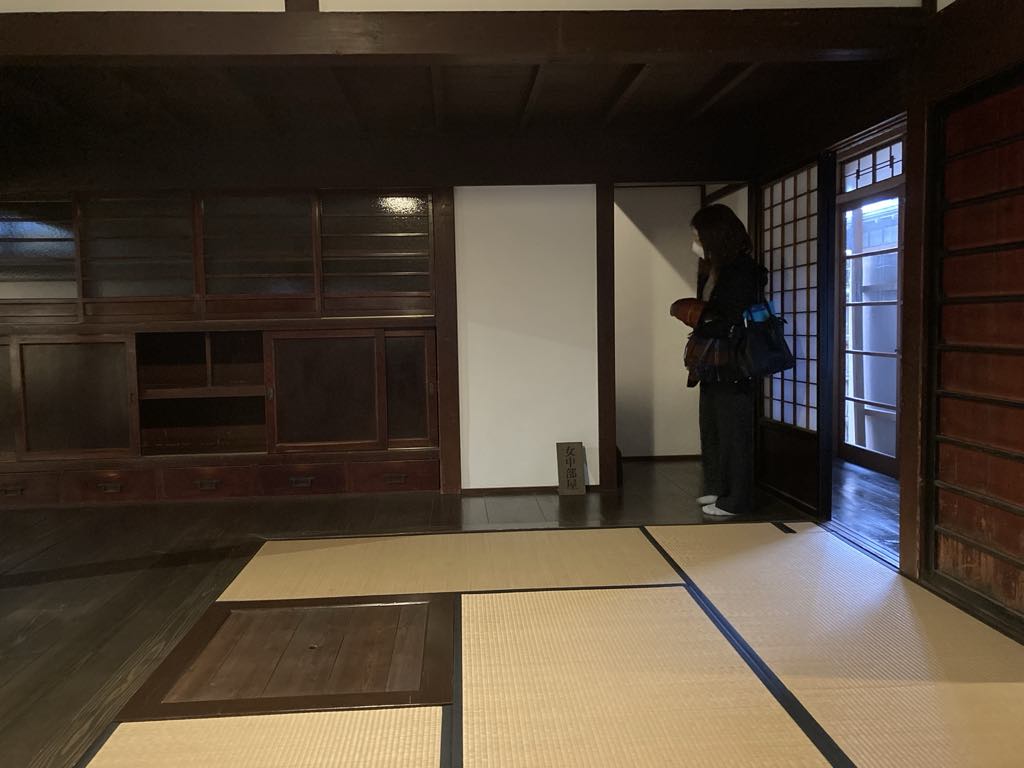
Next, we visited the Old Kaneko Family House, a Designated Tangible Cultural Property of Akita City. The Kaneko family opened a pawnshop and secondhand clothing store in the late Edo period and later started kimono wholesaling in the early Meiji period. This building remained in use for business until 1981. As a traditional late-Edo-period structure, it has been recognized as a tangible cultural property of Akita City. The house consists of a main building and a storehouse, and today, the storehouse and a Japanese-style room can be used for hobby classes and small gatherings. One interesting item on display is a Tensui jar, which was placed on the roof to store water in case of fire. Since large jars like this were not made in Akita at that time, it is believed that Kitamae ships brought it from another region. Its color, shape, and material are similar to Iwami ware from Shimane Prefecture, so it was likely ordered and delivered by sea.
次に、市指定有形文化財「旧金子家住宅」についてご紹介します。金子家は、江戸時代後期に質屋・古着商を開き、 明治初期に呉服・太物の卸商を創業し、昭和57年までこの建物で商売が営まれていました。江戸時代後期の伝統的な建物として、秋田市の有形文化財として指定されています。建物は、主屋一棟と土蔵一棟からなっていて、土蔵や和室は趣味の教室や少人数の集まりごとにご利用できるそうです。 天水甕(てんすいがめ)が展示してあり、これは火事に備えて、主屋の屋根に水を入れた甕を置いたそうです。江戸時代の秋田にはこのような大きな甕を制作している窯はなかったため、島根県の石見焼(いわみやき)の甕と色、形、材質が似ていることから、北前船で取寄せたのではないかと推察できるそうです。
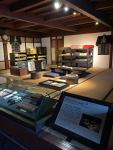
At the Old Kaneko Family House, we explored the storehouse, the storefront from the early Showa period, the 1.5-meter-wide earthen corridor connecting the storehouse and the storefront,a covered walkway called Komise, built for use even in heavy snow, and the kitchen. The storehouse was impressive and beautiful, and the Old Kaneko Family House was a wonderful building full of history.
旧金子家では、蔵、昭和初期の店先、蔵と店先をつなぐ1.5メートル幅の通り土間、積雪でも通行できるようになっている「こみせ」いうアーケードのような空間、台所を見学しました。土蔵が重々しくも美しく、旧金子家は歴史を感じる素敵な建物でした。
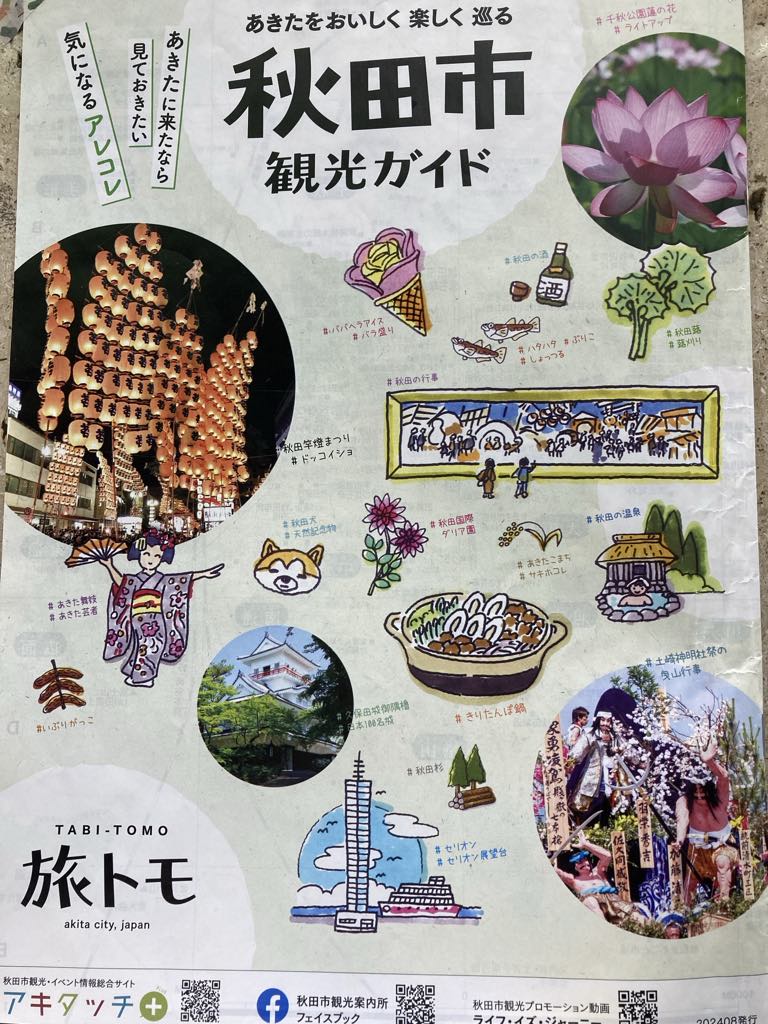
Lastly, I would like to introduce you to Ms. Iwasaki, known as the “Akita Tourism Lady,” who shares the charms of Akita in a guidebook called “Akita Illustrated Guide Created by Everyone”. She joined this study session and introduced many wonderful aspects of Akita. Ms. Iwasaki, the Akita beauty, is also featured in the “Akita City Tourist Guide” pamphlet, so be sure to check it out!
◆Location: 1-3-30 Omachi, Akita City
◆Access: Approximately 15 minutes walk from JR Akita Shinkansen “Akita Station”
◆Telephone:
◆Hours: 9:30 am – 4:30 pm
◆Admission: Adults 130 yen / Free for High school students and younger
◆Closed: December 29 – January 3
「秋田市民俗芸能伝承館 愛称:ねぶり流し館」、「市指定有形文化財 旧金子家住宅」
◆場所:秋田市大町1-3-30
◆アクセス:JR秋田新幹線「秋田駅」より徒歩約15分
◆電話:
◆観覧時間:午前9:30~午後4:30
◆入場料:大人130円 / 高校生以下無料
◆閉館日:12月29-1月3日